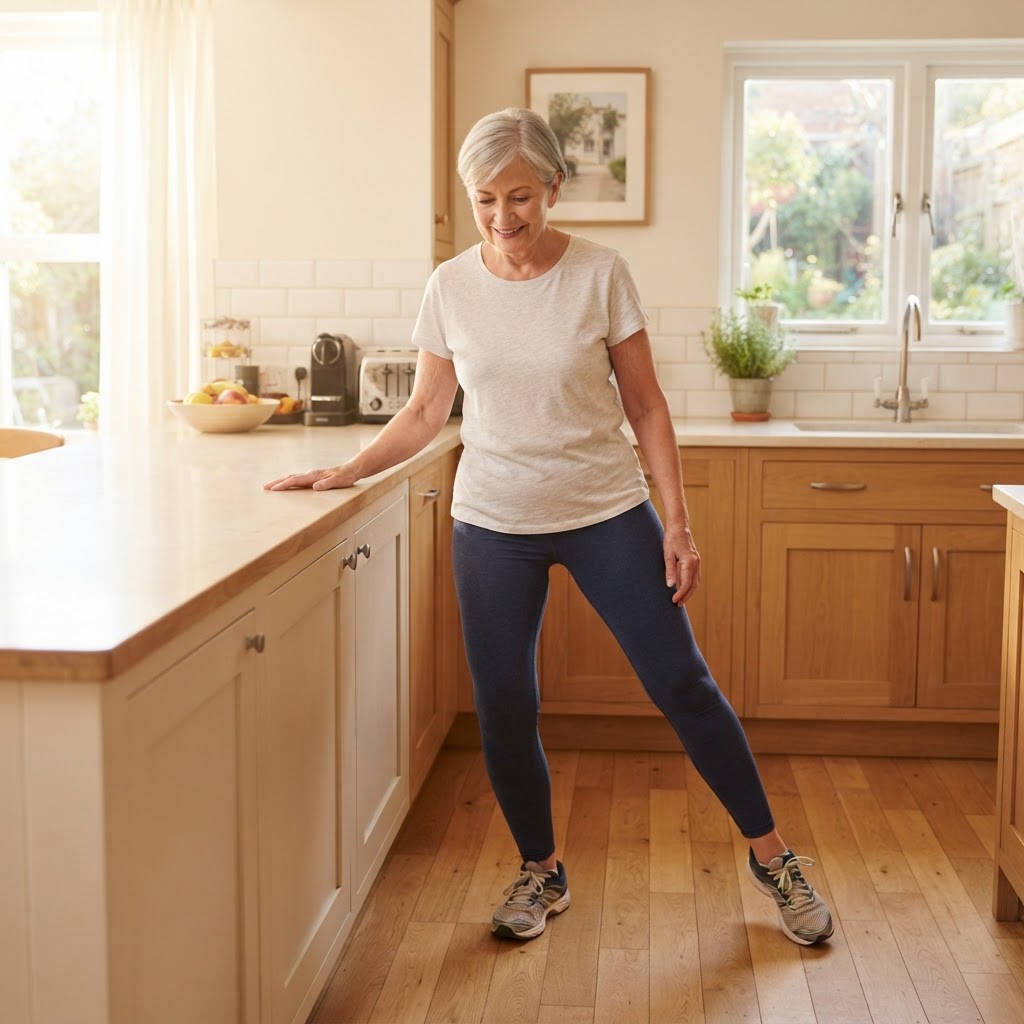
The Lateral Step Tap: Why Stepping Wider and Tapping Lighter Builds Better Balance
Step wide. Tap light. That's the whole drill — and it's harder than it looks.
If you've ever stepped around a pet, sidestepped a spill, or shifted over in a crowded aisle, you've used exactly this movement pattern. The lateral step tap trains it deliberately: take a full step out to the side, then bring your other foot back so it only taps the ground rather than planting.
The tap is the tell. If you have to plant that foot, your balance quietly did the work for you. If you can barely touch and stay steady, your standing leg is doing what it needs to do in real life.
Why Sideways Movement Is the Gap
Almost all of our daily steps go forward. Sideways movement — the kind that happens when you step around something unexpected — gets almost no practice. That matters, because a large share of falls happen during sideways and turning movements, not straight-ahead walking.
Training lateral control deliberately is one of the most effective ways to close that gap without any equipment beyond a counter, rail, or chair.
What the Drill Actually Trains
Hip stability on the standing leg
Every rep asks your standing hip — the glute medius in particular — to keep your pelvis level while your other leg travels. That's the muscle group most associated with sideways collapse and fall risk.
Controlled weight transfer
Stepping out and back means moving your bodyweight side to side, under your control, repeatedly. That's a different skill from standing still on one leg.
Foot and ankle awareness
A light tap requires your moving foot to meet the ground gently and precisely instead of slamming down for support. That precision is trainable.
Coordination between both sides
Your body has to organize the stepping leg and the standing leg together — a pattern that only shows up when you rehearse it.
Two Progressions That Make It Harder
1. Step wider
A wider step forces a bigger weight shift and more control from the standing leg. When your current width feels boring and controlled, add a few inches.
2. Tap lighter
Instead of a full tap, barely touch the ground. The lighter the touch, the less help you get from the moving foot — and the more the standing leg has to own your balance.
Both progressions are self-scaling, which is why this drill works for a wide range of abilities. And both are easy to overdo: control first, distance and lightness second.
Safety Comes First
Hold onto a rail, counter, or sturdy chair for the entire drill. Support in reach is not cheating — it's what lets you train right at the edge of your ability without risk. Stay within arm's reach of your support the whole time, and keep the movement slow enough that you could stop at any point.
Who It's For
Anyone who wants steadier footing when life moves sideways — especially adults after physical therapy, where lateral control is often the first thing to fade. It needs nothing more than a counter and a few minutes.
Try It With Us
Watch our video demonstrating the full drill and both challenges (see our videos page), then try it at your own counter and tell us which challenge is harder.
At WellFit ROC, I help adults in Rochester, Webster, Penfield, Pittsford, and the surrounding areas bridge the gap between physical therapy discharge and real-world strength, balance, and confidence — in-home or virtual. If you want a program built around drills like this, book a free consultation.
Jesse Brenon is a Licensed Physical Therapist Assistant (PTA), NASM-Certified Personal Trainer, and the founder of WellFit ROC.
Ready to take the next step?